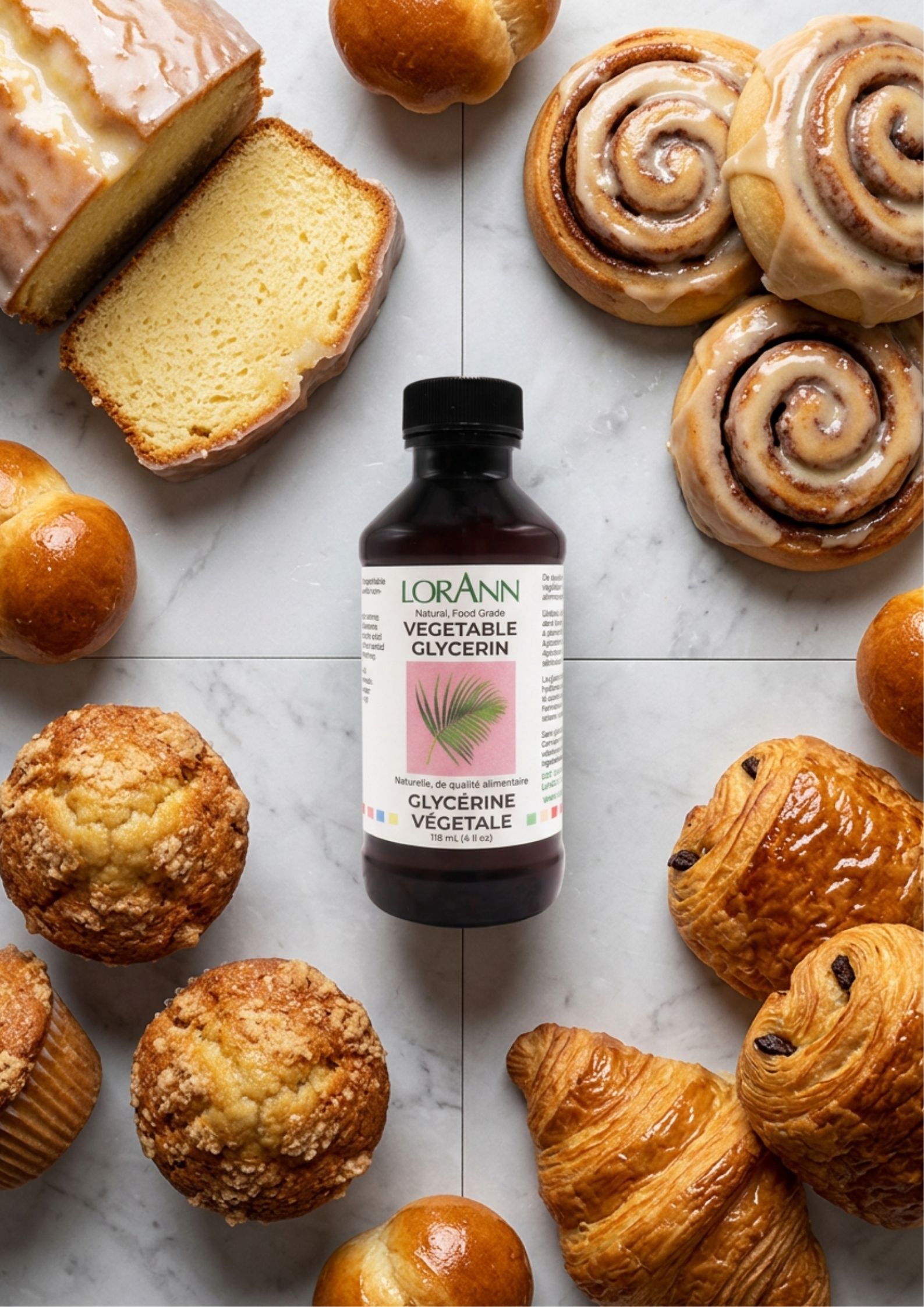
Have you ever wondered how bakery cakes stay soft, fondant remains smooth, and donut glazes keep that irresistible shine? One surprisingly versatile ingredient can help: vegetable glycerine. Also called vegetable glycerin or glycerol, vegetable glycerine is a clear, odorless, slightly sweet liquid derived from plant oils. In baking and confectionery, it works behind the scenes to improve moisture, texture, flexibility, and appearance. You only need a small amount to make a noticeable difference.

1. Keep Baked Goods Fresh and Moist
Vegetable glycerine is a humectant, which means it attracts and holds on to moisture. It makes it especially useful in baked goods that tend to dry out over time.
When used in the right amount, vegetable glycerine can help cakes, muffins, cookies, and other treats maintain a soft, tender texture for longer. Instead of becoming dry or crumbly soon after baking, they can retain more of the moisture that makes a fresh bake so satisfying.
This is helpful when you are:
- Baking cakes a day or two before decorating or serving
- Packaging cookies, brownies, or other treats as gifts
- Preparing desserts for a party, market, or special event
- Working with recipes that naturally dry out more quickly
Vegetable glycerine does not replace proper storage, but it can give freshness and texture a welcome boost. Add it with the wet ingredients so it disperses evenly throughout the batter or dough, and follow a trusted recipe or the product manufacturer’s usage guidance.

2. Keep Fondant Soft, Supple, and Easier to Shape
Fondant needs a delicate balance. If it is too dry, it can crack, tear, or develop an uneven surface. If it is too soft, it can become sticky and difficult to handle.
Vegetable glycerine helps fondant retain flexibility, making it easier to knead, roll, shape, and smooth over a cake. Its moisture-retaining properties can also help slow the drying that leads to rough edges and surface cracks.
For cake decorators, that extra working time can be invaluable. Supple fondant conforms more easily to curves and corners, and it is more forgiving when creating molded decorations or small details.
Because glycerine is powerful, use it sparingly. A little can restore pliability; too much may make fondant overly soft or tacky. Work in a small amount at a time until the texture feels smooth and manageable.

3. Help Prevent Sugar Crystallization
Smooth texture is essential in candies, syrups, frostings, and glazes. But concentrated sugar mixtures can sometimes form unwanted crystals, leaving the finished product grainy instead of silky.
Vegetable glycerine can interfere with the orderly formation of sugar crystals. This helps sugar-based mixtures stay smoother and more consistent—an advantage when you want a polished finish or a pleasant, creamy texture.
That makes vegetable glycerine a useful supporting ingredient in applications such as:
- Fondant and certain icings
- Fudge and confectionery
- Sugar syrups
- Dessert sauces and glazes
It is not a substitute for careful temperature control or good candy-making technique, but it can provide another layer of protection against crystallization.

4. Create Smooth, Glossy Glazes
A beautiful glaze should taste delicious, flow smoothly, and look inviting. Vegetable glycerine can help create a more fluid, polished glaze with an eye-catching sheen.
In donut glazes and similar finishes, it helps retain moisture so the surface is less likely to look dry or chalky. It can also support a smoother consistency, making the glaze easier to dip, drizzle, or spread. The result is an even coating with a bakery-style gloss that makes every treat look a little more special.
This is especially useful for:
- Donuts and pastries
- Glazed cookies
- Drizzle cakes
- Petit fours and other small confections
For the best result, begin with a tested formula and avoid overusing glycerine, which can prevent a glaze from setting as intended.
A Few Tips Before You Start
Vegetable glycerine is easy to use, but a few simple guidelines will help you get the best results:
- Choose food-grade vegetable glycerine. Products made for cosmetics or crafts are not automatically suitable for eating.
- Measure carefully. Too much may produce a sticky, gummy, or overly soft texture.
- Add it gradually. This is especially important when adjusting fondant, frosting, or glaze.
- Use it as part of a complete technique. Accurate baking, proper temperatures, and airtight storage still matter.
- Follow the recipe or product directions. The ideal amount varies by application and batch size.
One Ingredient, Four Professional Touches
Vegetable glycerine may not be the most familiar bottle in the baking aisle, but it is a hardworking addition to a baker’s toolkit. It can help baked goods stay fresh and moist, keep fondant soft and workable, discourage unwanted sugar crystals, and give glazes a smooth, glossy finish.
Ready to see what it can do? Watch Better Baking with Vegetable Glycerin for a closer look at these techniques, then try food-grade vegetable glycerine in your next baking project. A small addition could make a big difference in how your creations taste, feel, and look.
Looking For More Ingredients That Will Help You Improve Your Treats?
In addition to being a flavor expert, LorAnn offers many specialty ingredients that can help with challenges like texture, shelf-life, and emulsification. For more information, visit: https://www.lorannwholesale.com/


Leave a Reply