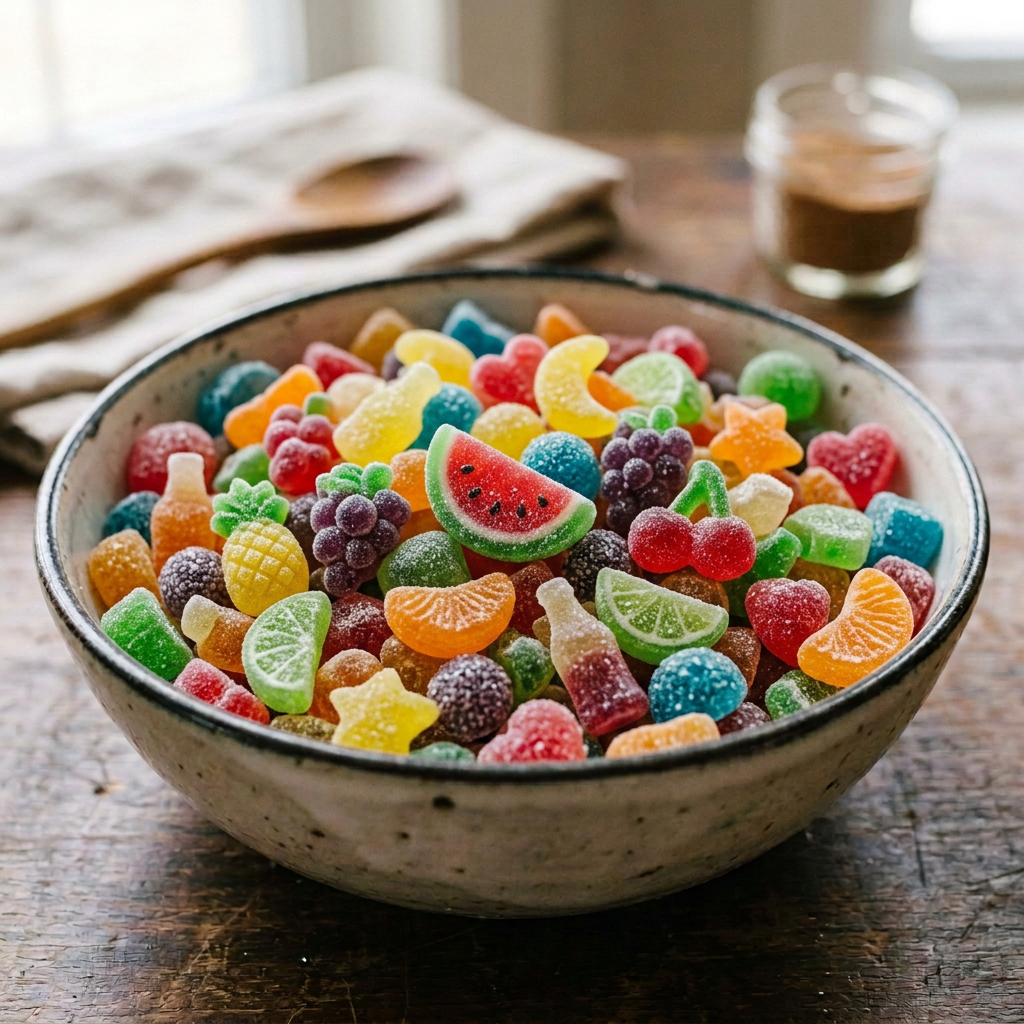

A perfectly sanded gummy delivers a bright burst of flavor, an appealing sparkle, and a clean, non-sticky finish. Achieving that result consistently, however, requires more than simply rolling gummies in sugar and acid.
From proper curing conditions to monitoring water activity, every step plays a role in creating a stable, professional-quality product. One of the most critical factors is selecting the right acid for your sanding blend.
Why Sand Gummies?
Sanding offers several advantages beyond appearance:
- Creates a bright, sour profile that enhances fruit flavors.
- Adds a pleasant textural contrast with a crisp sugar coating.
- Helps prevent gummies from sticking together during packaging and storage.
- Provides visual appeal that consumers associate with premium sour candies.
When done correctly, sanding enhances both the eating experience and the shelf stability of your finished product.
Choosing the Right Acid
LorAnn offers several acid options for confectionery applications:
- Citric Acid
- Tartaric Acid
- Ascorbic Acid
- Tart & Sour
- Encapsulated Citric Acid
- Encapsulated Malic Acid
While traditional citric, tartaric, and ascorbic acids works well in cooked candy formulations, encapsulated acids are the preferred choice for sanding gummies.
Why Encapsulated Acids?
Non-encapsulated acids begin dissolving almost immediately when it comes into contact with moisture on the gummy’s surface. As it dissolves, it can draw additional moisture from the candy, leading to:
- Wet or sticky candy surfaces
- Dissolving sugar crystals
- Uneven sour distribution
- Clumping during packaging
- Reduced shelf life and diminished visual appeal
Both LorAnn Encapsulated Citric Acid and LorAnn Encapsulated Malic Acid feature a protective coating that delays contact between the acid and surface moisture. This helps maintain the integrity of the sugar coating while delivering a clean, consistent sour finish.
Benefits include:
- Maintains a dry, sparkling sugar coating
- Reduces moisture migration into the sanding blend
- Improves coating stability during storage
- Produces more consistent results during production
- Extends the visual appeal of finished gummies
Citric vs. Malic Acid: What’s the Difference?


Although both acids provide sourness, they create distinctly different flavor experiences.
Citric Acid
- Bright, sharp, and immediate tartness
- Familiar, citrus-forward sourness
- Excellent for lemon, lime, orange, berry, and tropical fruit profiles
Malic Acid
- Smooth, lingering sourness
- Often described as the tartness naturally found in apples and many stone fruits
- Excellent for apple, cherry, watermelon, peach, pear, and candy-inspired fruit flavors
Many professional candy manufacturers choose to blend citric and malic acids to create a more complex sour profile. Citric acid delivers the initial burst of tartness, while malic acid extends the sour sensation, creating a longer-lasting flavor experience.
Experimenting with different ratios allows you to tailor the sour profile to your specific flavor.
The Ideal Sanding Blend
For most sour gummies, a good starting point is:
10 parts granulated sugar : 1 part encapsulated acid
For example:
- 1,000 g granulated sugar
- 100 g Encapsulated Citric Acid
- or 100 g Encapsulated Malic Acid
- or a combination of both acids totaling 100 g
Blending encapsulated citric and encapsulated malic acid allows you to customize the sour profile while maintaining the stability benefits of encapsulation.
Proper Curing is Essential
Before sanding, gummies should be cured in a room maintained at approximately 35% relative humidity. Proper curing allows excess surface moisture to leave the candy while maintaining the desired interior texture. If gummies are sanded too early, excess moisture will migrate into the sugar coating, causing the sanding mixture to dissolve and the candies to become sticky. Controlling the curing environment is one of the most effective ways to improve product consistency.
Verify with a Water Activity Meter

Rather than relying solely on curing time, professional manufacturers verify readiness using a water activity (aw) meter. For sanded gummies, the target water activity should be: aw of 0.54 or lower. At this level, gummies are significantly less likely to release enough moisture to dissolve the sanding mixture or create sticky packages. Equally important is ensuring that your water activity meter is properly calibrated before taking measurements. An improperly calibrated meter can produce inaccurate readings, potentially leading to gummies being sanded before they are truly ready. Using calibrated instrumentation removes guesswork and helps create consistent, repeatable production results.
Best Practices for Sanding Gummies
For the best finished product:
- Cure gummies in an environment maintained at 35% relative humidity.
- Calibrate your water activity meter before testing.
- Verify gummies measure 0.54 aw or lower before sanding.
- Mix your sanding blend at a 10:1 ratio of sugar to encapsulated acid.
- Choose LorAnn Encapsulated Citric Acid, LorAnn Encapsulated Malic Acid, or a blend of both to achieve your desired sour profile.
- Package gummies promptly in moisture-resistant packaging after sanding.
Following these steps will help produce gummies with a bright sour profile, beautiful appearance, and excellent shelf stability.
Watch the Process
In this video, you’ll learn how to properly prepare gummies for sanding, measure water activity, and use LorAnn’s encapsulated acids to create a professional-quality sour coating that stays crisp and beautiful.

Frequently Asked Questions
What water activity should gummies have before sanding?
For best results, gummies should measure 0.54 aw or lower. This minimizes moisture migration that can dissolve the sugar coating and create sticky candy.
Why should I use encapsulated acids instead of regular citric acid?
Encapsulated acids delay contact between the acid and the gummy’s surface moisture. This helps keep the sanding blend dry, maintains a sparkling appearance, and improves shelf stability.
What’s the difference between citric acid and malic acid?
Citric acid provides a bright, sharp, citrus-like tartness that is perceived immediately. Malic acid delivers a smoother, longer-lasting sourness often associated with apples and other orchard fruits. Many confectioners blend the two to create a layered, more dynamic sour profile.
Can I mix encapsulated citric acid and encapsulated malic acid?
Yes. Blending the two acids is an excellent way to customize the sourness of your gummies. Citric acid provides the initial punch, while malic acid extends the sour sensation for a more balanced flavor experience.
What is the recommended sugar-to-acid ratio for sanding gummies?
A 10:1 ratio of granulated sugar to encapsulated acid is an excellent starting point for most applications. You can then fine-tune the level of sourness based on your product and target consumer.
Why is curing at 35% relative humidity important?
A curing room maintained at approximately 35% RH allows excess moisture to leave the gummy gradually. Properly cured gummies are less likely to weep after sanding and package much more successfully.
Do I need to calibrate my water activity meter?
Yes. Calibration ensures accurate measurements. An inaccurate reading can result in sanding gummies before they’re sufficiently cured, increasing the likelihood of sticky or weeping candy.
If you have any additional questions, please reach out to us at customercare@lorannoils.com.
To apply for a wholesale account, please complete this application.




Leave a Reply